
Prototype in progress · Trials 2027 · First units 2028
Industrial‑grade freezing, on your floor.
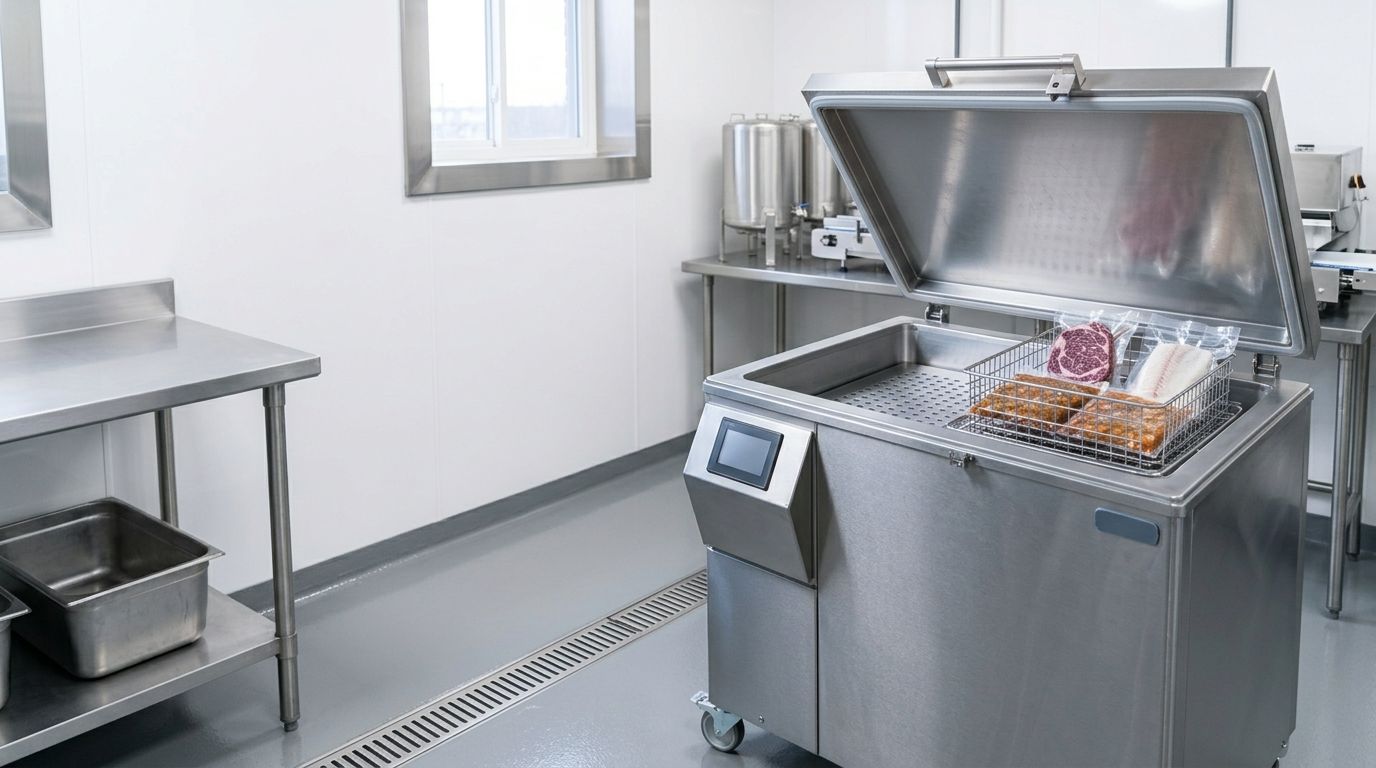
A rapid freezer the size of a chest freezer. Your vacuum-packed products freeze in minutes, in your own facility. No gas. One 240 V connection.
Unit SQuick specs
- Target capacity
- ≈ 20 kg/h
- Power
- 240 V · 1 phase
- Consumable
- No gas
- Terms
- Buy or lease
The situation
Fast freezing used to be for big plants only.
01
In season, it overflows
Freezers fill up. Freezing becomes the bottleneck of the whole operation.
02
Freezing elsewhere costs time
Transport, waiting, handling. And product that travels before it is frozen.
03
Surplus goes to waste
Because there is no way to freeze it fast and well, the same day.
How it works
A cold bath instead of cold air.
A liquid pulls heat out far faster than air. So the product freezes in minutes.
01
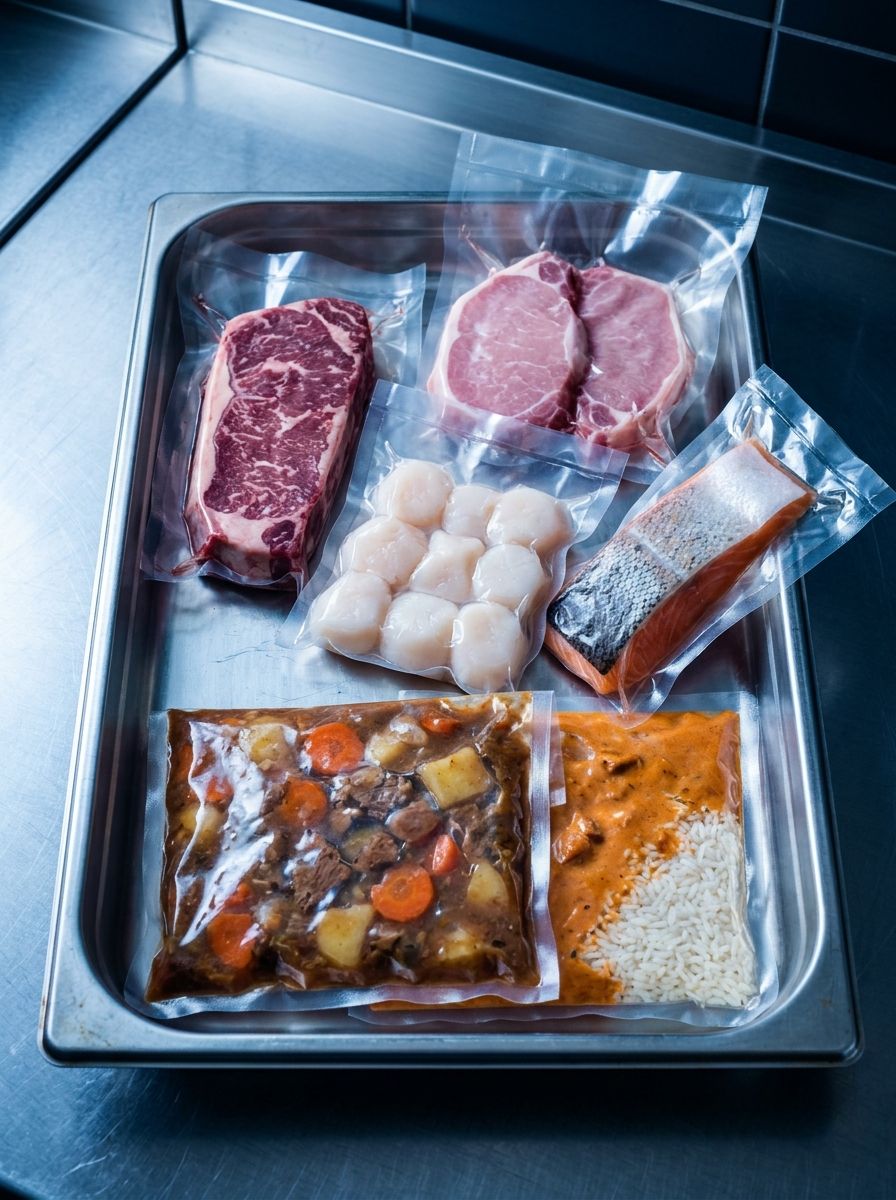
Vacuum-pack
Meat, fish, seafood, prepared meals: any product in a sealed vacuum pouch.
02
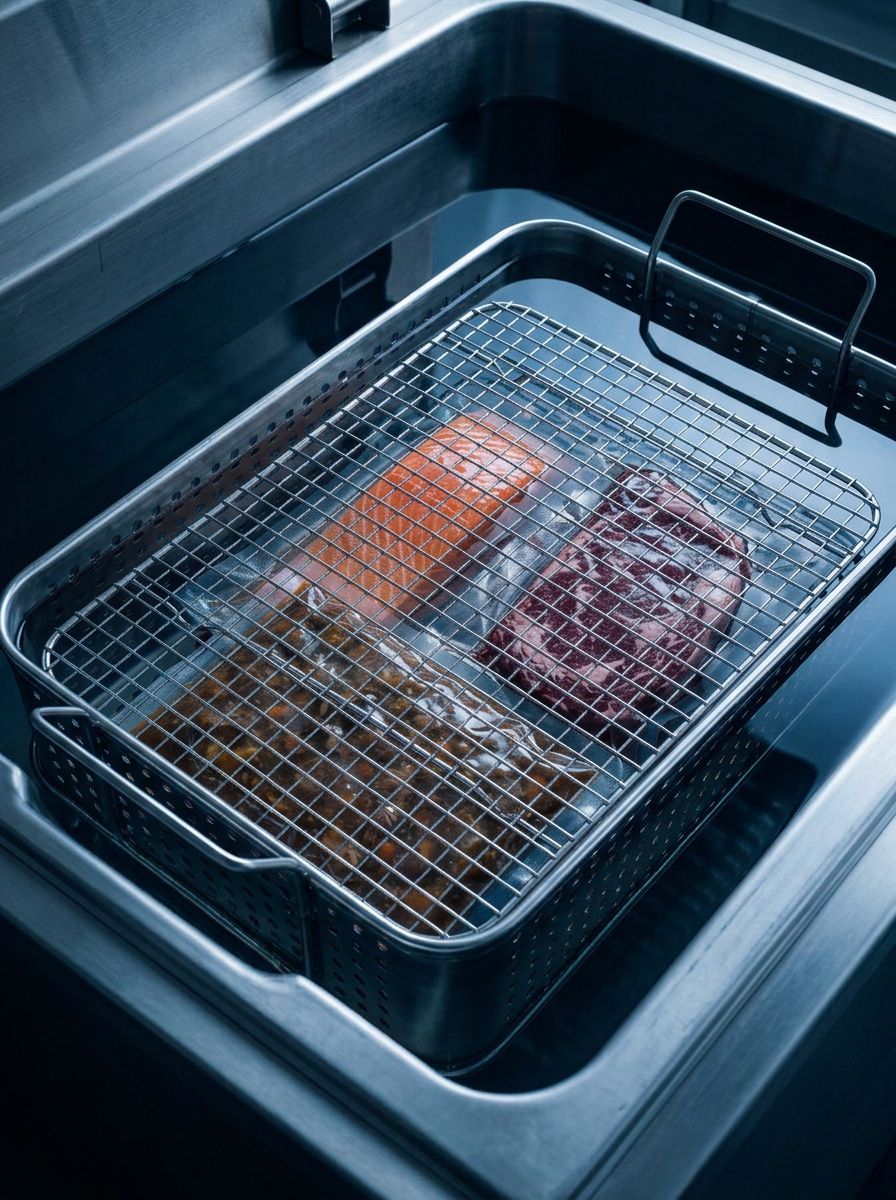
Lower into the cold bath
The machine cools its own bath with electricity, like a freezer. No gas to order.
03
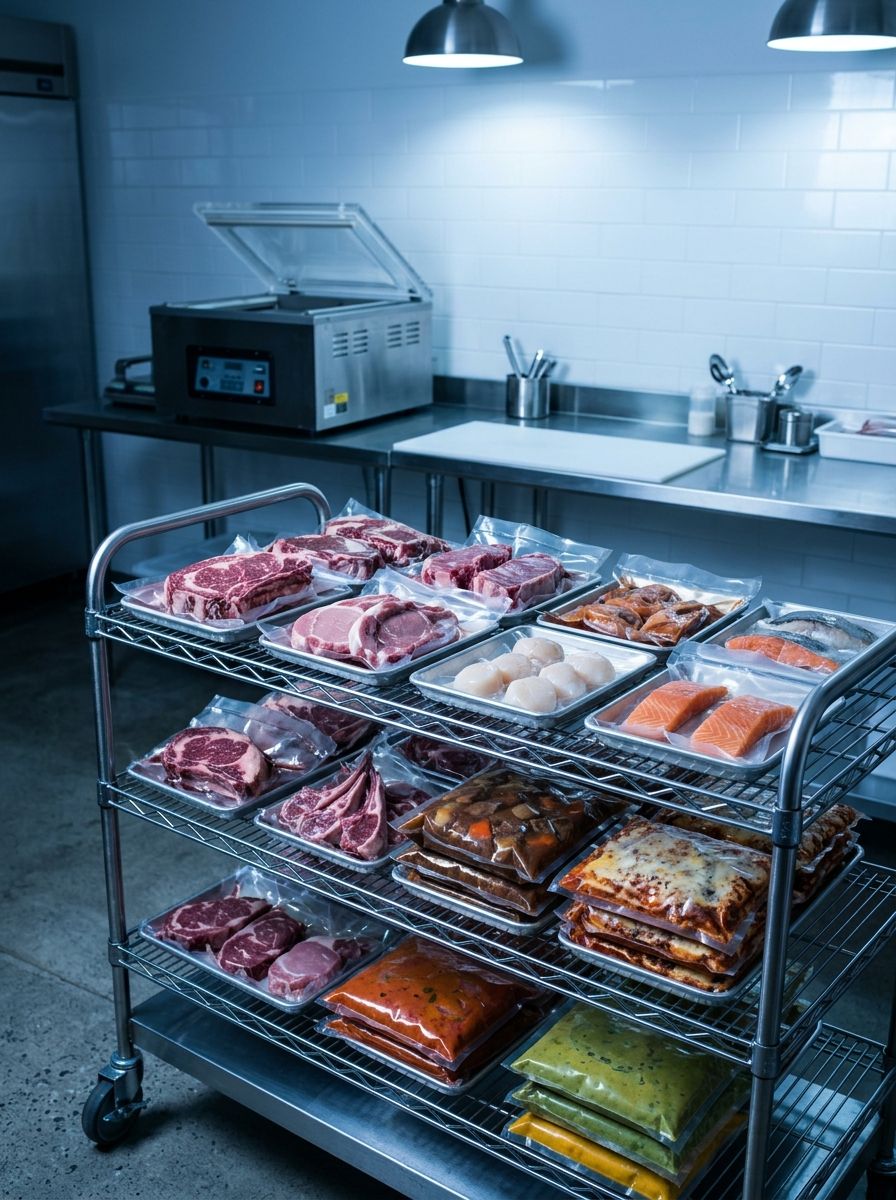
Take out frozen product
Ready to store, ship or sell. The same day.
The product never touches the liquid. Only the pouch is in contact with the bath.
Compare
Blast air, nitrogen or immersion?
Three ways to freeze fast. Each has its own ground. Here is where the Unit S stands.
| Cabinet or tunnelBlast air | Cryogenic tunnelLiquid nitrogen | Immersion · our approachUnit S | |
|---|---|---|---|
| Speed | Blast airMediumAir pulls heat out slowly. | Liquid nitrogenVery fastThe fastest of the three. | Unit SFastMinutes for a 2.5 cm portion. |
| Installation | Blast airSimple to heavyA cabinet plugs in. A tunnel is a project. | Liquid nitrogenHeavyNitrogen tank, ventilation, oxygen monitoring. | Unit SSimpleOne dedicated 240 V circuit. On casters. |
| To refill | Blast airNothingRuns on electricity. | Liquid nitrogenNitrogenDelivered by truck, used up with every batch. | Unit SNothingRuns on electricity. An occasional liquid top-up. |
| Products | Blast airAllPackaged or not. | Liquid nitrogenAllPackaged or not. Ideal for loose product. | Unit SVacuum-packedThe product must be in a sealed pouch. |
| Volume | Blast airSmall to largeSmall batches in a cabinet, high output in a tunnel. | Liquid nitrogenLargeContinuous, by the tonne. | Unit SSmall to medium≈ 20 kg/h per unit. Add units as you grow. |
| Best for | Blast airThose who are not in a hurry, or who already run a tunnel. | Liquid nitrogenHigh-volume plants. | Unit SFacilities that want the speed without the infrastructure. |
Where the others win
A comparison between technologies, not between specific models. Our own figures are targets, to be confirmed on the prototype.
- Loose or unpackaged product: berries, vegetables, bread. Go with blast air or nitrogen.
- Several tonnes a day, non-stop. A tunnel is built for that.
- No time pressure at all. A blast cabinet does the job.
Speed
Minutes, not hours.
Orders of magnitude for a 2.5 cm vacuum-packed portion, from +4 °C to −18 °C at the core (Plank's equation, FAO data). These are not our measurements yet: those will come from the prototype.
What speed gives you
- Pack and ship the same day. No more missed shipments.
- No next-day shift spent rotating product through the freezers.
- Better freezing means less loss at thawing.
- Less logistics, less to manage.
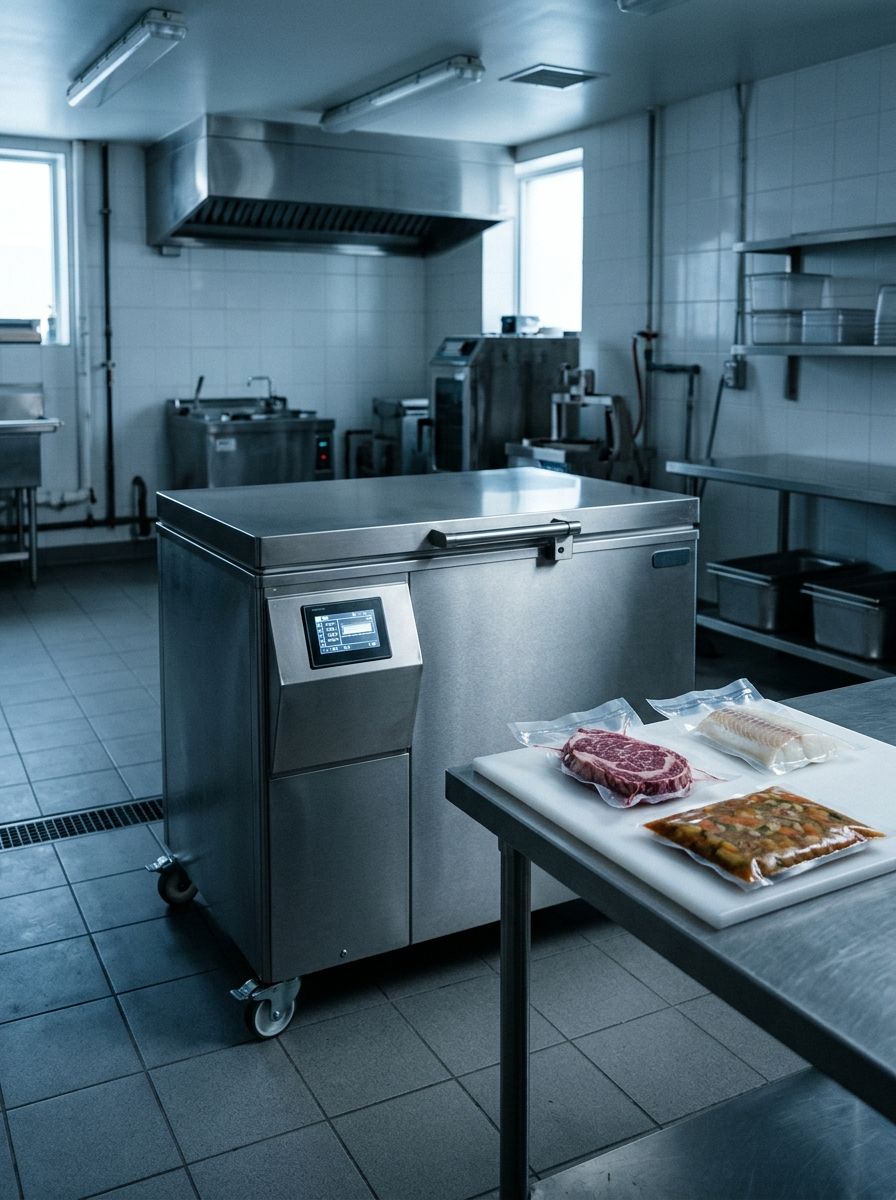
Unit S
One machine. One plug.
It rolls through a standard door and sits where a chest freezer would. The refrigeration unit is built in.
- Target capacity
- ≈ 20 kg/hAbout 150 kg per 8-hour shift, depending on product and thickness.
- Power
- 240 V single-phase, one dedicated circuit
- Footprint
- ≈ 1.3 × 0.7 m, on casters
- Build
- Stainless steel tank, fully drainable, easy to clean
- Controls
- Front screen: temperature, timer, alarms
- Tracking
- Cryo Connect: every batch logged, with traceability and alerts
- Service
- Designed and built in Québec, with local service
To buy or to lease.
Target specifications, to be confirmed on the prototype.
Capacity
Need more volume? Add units.
The Unit S is a building block. Start with one. Line up several. Or have a full container delivered for your season.
1 Unit S
≈ 20 kg/h≈ 150 kg per shift
For a farm, a butcher shop or a kitchen. One 240 V circuit.
2 to 4 Unit S
≈ 40–80 kg/h≈ 300 to 600 kg per shift
Side by side in your facility. One circuit per unit. If one stops, the others keep running.
Plug & Play Container · planned for 2028
≈ 80 kg/h≈ 600 kg per shift, packing station included
Four Unit S machines in a 20-foot container. Delivered, plugged in, taken back after your season.
The Plug & Play Container
Peak capacity, without the building work.
- Four Unit S machines, a vacuum-packing station and a sink
- Set on the ground at your site, no trailer
- Three-phase connection, or a generator
- Rented for your season, or bought by hubs and shared facilities
The container comes after the Unit S. Tell us now if it fits your operation: your needs will shape it.
Who it's for
For those who slaughter, process or cook.
Food processing kitchens
Prepared meals, sauces, meat, fish: vacuum-packed and frozen the same day, without a tunnel.
SetupOne to four Unit S machines
Slaughterhouses and cutting plants
Swamped in season. Freezing should never hold up the cutting line.
SetupSeveral Unit S, or the Container
Fish and seafood processors
Short seasons, large landings. Freeze the same day, right after processing.
SetupUnit S, Container in season
Farms and butcher shops
You already freeze, but too slowly, or somewhere else. Bring it back in-house.
SetupOne Unit S
Commissary kitchens and caterers
Prepared meals and surplus, frozen in portions the same day.
SetupOne or two Unit S
Hubs and shared facilities
One piece of equipment, many member businesses.
SetupSeveral Unit S, or the Container
Meat, poultry, fish, seafood, prepared meals: any vacuum-packed product.
Where we stand
Before the prototype. And we say so.
- Late 2026
First test rig and side-by-side freezing trials.
- 2027
Unit S prototype. Trials with the member businesses of a Montréal agri-food hub, and pilots at producers' sites.
- 2028
First units sold or leased. First container rented for a season.
Supported by the incubators GarageCo (Montréal) and 2 Degrés (Québec City).
We're looking for pilot sites
You already freeze, but too slowly, or somewhere else? We want to test with your products in 2027.
Put my site forward
Who's behind it
Arnaud de Kettenis, founder
Over 12 years running operations and logistics, including food production, at BRP, Amazon and Goodfood. Belgium, Switzerland, Singapore, then Montréal.
FAQ
The questions we get.
Which products can be frozen?
Any vacuum-packed product: meat, poultry, fish, seafood, prepared meals. Portion thickness drives the freezing time.
My products are not vacuum-packed. Is that a problem?
Yes: the pouch is what keeps the product away from the liquid. You need a vacuum sealer upstream. The Container includes a packing station. For loose product, blast air or nitrogen is the better fit.
Does the product touch the liquid?
No. The product stays in its vacuum pouch. Only the pouch is in contact with the bath. The liquid is non-flammable and registered NSF HT1 for incidental food contact.
Do I need gas or nitrogen?
No. The machine plugs into 240 V and cools its own bath, like a freezer.
What installation is required?
For the Unit S: one dedicated 240 V single-phase circuit, installed by an electrician, and some clearance for ventilation. For the Container: a three-phase connection or a generator, and a level spot on the ground.
20 kg/h is not enough for us. What then?
Add units. Two to four Unit S machines run side by side, or come in a container with a packing station: about 80 kg/h. Beyond several tonnes a day, a tunnel remains the right tool.
Buy or rent?
Both. The Unit S can be bought or leased. The Container is rented for a season, or bought by hubs that share it among their members.
How much does it cost?
Prices will be set with the prototype results. Write to us: we will give you a range based on your volume.
When will it be available?
Trials run in 2027 and the first units are planned for 2028. We are signing up pilot sites now.
Contact
Let's talk about your production.
Thirty minutes to understand your volumes, your products and your season. No commitment.
- Arnaud de Kettenis, founder
- Montréal, Québec
- linkedin.com/in/arnaud-de-kettenis